

January 4, 2026
- Added citation of misdemeanor penalties and specific legal authority (8 U.S.C. § 1305) for failing to report address changes
- Updated deadlines and timelines with explicit guidance: count 10 calendar days from move day and file as soon as you have a stable mailing location
- Added 2025–2026 procedural updates: fastest method is USCIS online account (preferred in 2026) and paper processing typically takes 3–4 weeks
- Included new registration rule effective April 11, 2025 requiring many non-citizens age 14+ to register (Form G-325R) and carry proof of registration
- Expanded practical instructions and risk mitigation: connect receipt numbers to online update, save confirmation proof, certified mail tips, and sponsor obligations (Form I-865 within 30 days)
If you have a pending I-485, you must report address changes to USCIS within 10 days of moving. Missing that deadline can mean missed notices, an abandoned case finding, and even misdemeanor penalties under federal law.
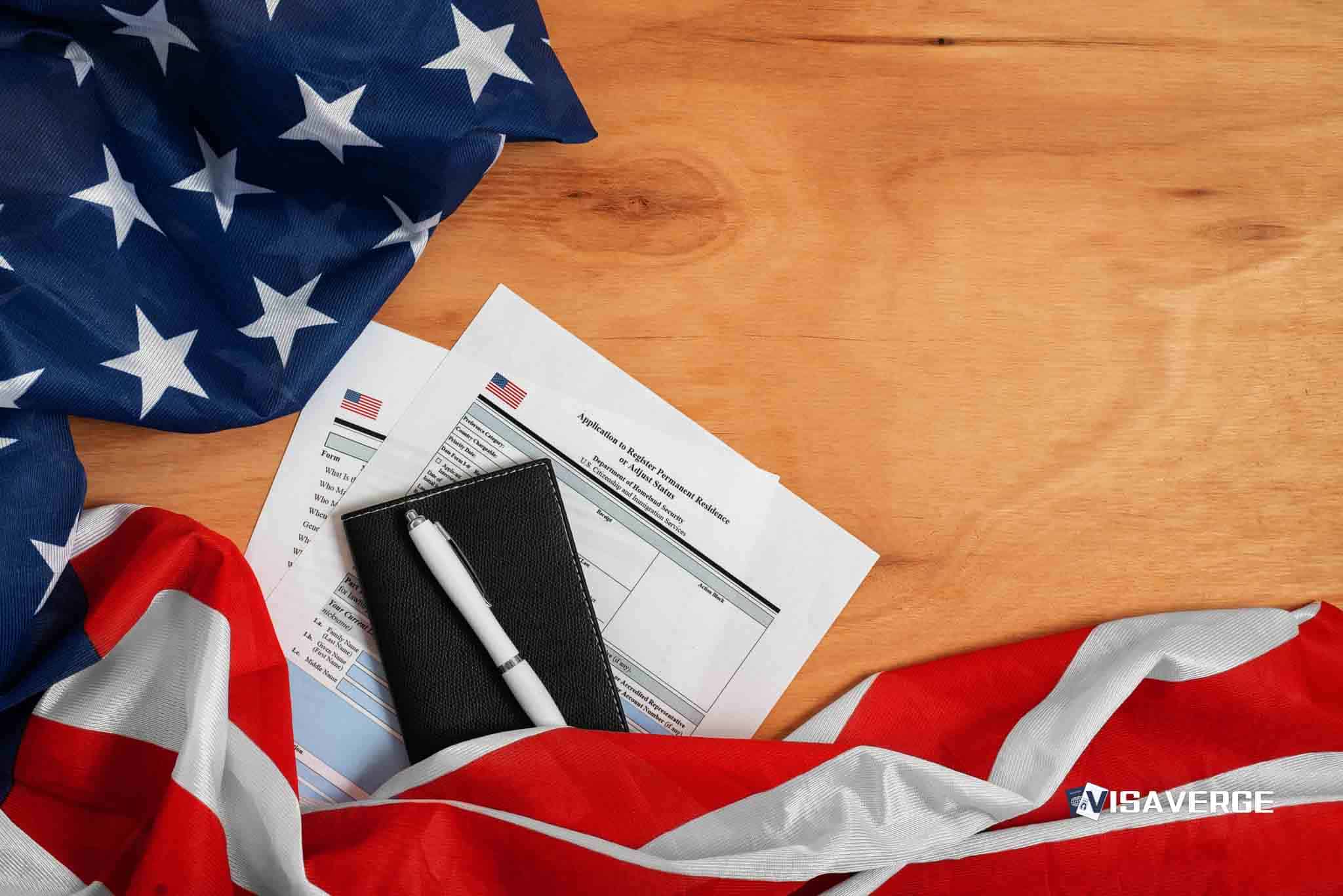
The rule applies to most non-citizens who stay in the United States for 30 days or more, including adjustment applicants, nonimmigrants, parolees, and green card holders. VisaVerge.com reports that address reporting remains one of the easiest requirements to follow, yet it causes avoidable denials when people move during processing.
Why an updated address decides your I-485 mail
USCIS sends almost everything by mail: biometrics appointments, Requests for Evidence (RFEs), interview notices, and the final decision. If a notice goes to an old address and you miss the response window, USCIS can deny the application as abandoned.
The legal duty comes from 8 U.S.C. § 1305, and the penalties can be real: fines up to $200, up to 30 days in jail, and referral into removal proceedings. Beyond that, a record of not following the rule can later be treated as bad moral character during naturalization.
Keep your address current. A simple update protects critical notices and prevents criminal and immigration consequences.
Timeline after you move: what USCIS expects in 10 days
- Day 0 is the day you move, not the day you remember to file.
- Count 10 calendar days, not business days.
- File as soon as you have a stable mailing location, even if you are still unpacking.
In a typical I-485 case, here’s what can hit your mailbox during a 12–24 month wait:
- Receipt notices and transfers. Confirm filing and sometimes move your case between service centers.
- Biometrics and interview notices. Missing one can delay the case or trigger denial.
- EAD and Advance Parole delivery. A card sent to the wrong address often becomes a long, expensive detour.
- RFEs. These ask for extra documents and usually have strict deadlines.
Fastest method in 2026: update through a USCIS online account
The quickest way to report address changes is the USCIS online account page, which updates USCIS systems almost immediately and lets you connect the change to each pending receipt number. That connection matters when your I-485 is being handled at a specific service center.
Use this four-step routine each time you move:
- Log in to your account on the USCIS online account page.
- Open “Change of Address,” then enter your name exactly as on
Form I-485and your A-number. - Add every pending receipt number, including the one for
Form I-485, so USCIS updates the active case file. - Submit, then save or print the confirmation screen as proof you met the 10-day rule.
USCIS does not treat a U.S. Postal Service forwarding request as an address update, so do both if you want extra protection. Also remember that each family member usually files separately; a parent or guardian files for children under 14.
Paper and phone backups: Form AR-11 and the Contact Center
If you can’t use the online tool, USCIS still accepts Form AR-11, Alien’s Change of Address Card. The tradeoff is speed: paper processing is commonly 3–4 weeks, which is risky when a card or interview notice is about to be mailed.
- Download and file the form from the official Form AR-11 page.
- Copy it for your records, and mail it using certified mail with return receipt.
- Keep the mailing proof with your I-485 receipt notices.
For emergencies, the USCIS Contact Center can take an address update by phone and give you a confirmation number. This is most useful when your Employment Authorization Document or green card is already in production.
Mistakes that turn a simple update into a case problem
Common errors to avoid:
- Assuming USPS forwarding fixes everything. Forwarding helps, but USCIS still considers your file unchanged until you report the move through your account, by phone, or with Form AR-11.
- Updating only the mailing address and forgetting the physical address, or mixing apartment numbers between the two. USCIS uses both fields for identity checks, and mismatches slow matching to your I-485 receipt number.
- Timing errors: filing late and missing an RFE deadline can force you to restart, or require fighting to reopen a denial after months of delay.
Consequences and costs:
- When a card is returned as undeliverable, replacement costs can add up fast. A lost EAD can mean reapplying with a $410+ fee (as of 2025), plus extra waiting.
- If your move happens near card production, call the Contact Center after you file the change to double-check that your pending case shows the new address.
- After you update, watch for the next USCIS notice and confirm it arrives. If nothing comes for months, rely on your confirmation and keep copies.
When mailing Form AR-11, include your A-number and receipt number in a short cover letter, and keep a copy of everything you sent. Paper trails matter when a notice goes missing.
Situations that need special handling for safety
Some applicants should not use standard online or phone tools because of confidentiality rules. USCIS directs filers in VAWA-based cases, T or U visas, and some Form I-751 abuse waivers to follow special instructions on the USCIS change-of-address guidance.
Frequent moves, pending mail, and sponsor duties
Moving often does not hurt your I-485 by itself, and the law sets no limit on how many times you can update. The risk comes from timing, because every move creates a new chance to miss an RFE, biometrics notice, or interview letter.
Related obligations that are easy to miss:
- Affidavit of Support sponsors: Anyone who signed
Form I-864must fileForm I-865within 30 days of moving. - F-1 and J-1 students: They often report through SEVIS with their school official within 10 days, instead of filing AR-11 themselves.
- Name matching: Use the same spelling and order as your I-485 filing to avoid mismatched records.
If you mailed Form AR-11, include your A-number and receipt number in a short cover letter, and keep a copy of everything you sent.
April 11, 2025 registration rules that raise the stakes
Starting April 11, 2025, expanded alien registration rules require many non-citizens age 14 and older who will stay 30 days or more to register online using Form G-325R and attend biometrics. People who already gave fingerprints for an I-485 are often already registered, but they still must keep address reporting current.
Adults 18 and older must also carry proof of registration, such as an I-94, a green card, an EAD, an I-797 after fingerprints, or the G-325R proof notice. DHS has emphasized enforcement, and address compliance is part of that pattern.
Recordkeeping that protects your application and your future N-400
Because USCIS does not offer a simple public screen showing the address it has on file, your confirmations become your evidence. Save screenshots, PDFs, and mailing receipts in one folder, and back them up.
Consequences of poor recordkeeping:
- When an EAD or green card is sent to the wrong place, you may face replacement fees and months of delay, and you may lose the job you were counting on.
- Keeping your I-485 address history clean supports the good-faith story you will later tell in an N-400 interview.
Helpful links to keep handy if you are filing adjustment now:
- Official Form I-485 page — case basics
- Online Form G-325R page — registration
- Sponsor’s Form I-865 page — affidavit of support updates
Treat every move like a deadline, and your mail will keep pace with your case.
Reporting a move to USCIS within 10 days is mandatory for I-485 applicants. Missing this window can lead to missed notices, application denial, and legal penalties. The online account system is the preferred update method, ensuring all pending receipts are linked. Relying solely on USPS forwarding is insufficient. Proper record-keeping of address updates is essential for future immigration steps like naturalization.


